Garlic is a staple spice that enhances the flavor of countless family meals. It is packed with essential nutrients that provide numerous health benefits. However, not all garlic is of good quality or has a long shelf life. Here are some signs to watch for when selecting garlic to ensure you get the best ones:
1. Garlic cloves separate widely from the bulb
Garlic bulbs with cloves that are spaced far apart and have partially lost their protective outer skin may seem appealing because they appear plump and easy to peel. However, if you plan to store garlic for an extended period, avoid this type. Without the outer layer, the cloves are more susceptible to mold, oxidation, and sprouting.
For better longevity, choose bulbs with tightly packed cloves that remain firmly attached to the stem and are covered with thick, intact skin. This helps protect the garlic from environmental factors, slows oxidation, and extends its freshness.
2. Soft garlic cloves
Always check the firmness of the cloves by gently pressing them. If they feel mushy or overly soft, the garlic is likely spoiled. Even if the entire bulb lacks firmness and doesn’t feel solid in your hand, it’s best to avoid buying it in bulk. Soft garlic is more prone to mold, shrinks over time, and loses its quality quickly.
3. Wrinkled or soft outer skin
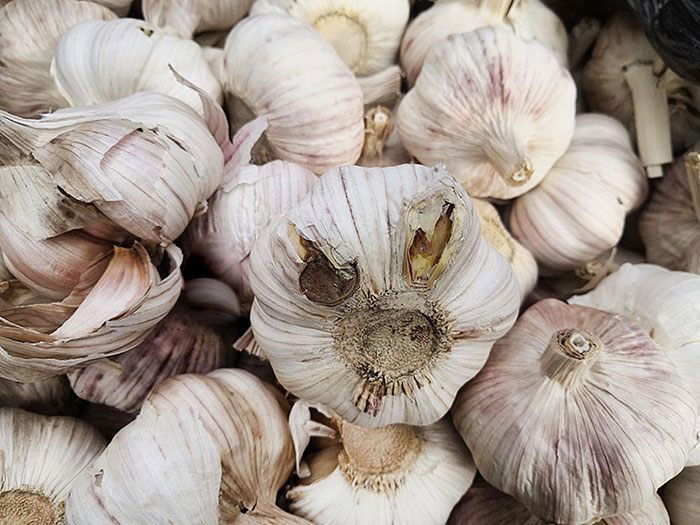
Garlic with a wrinkled or soft outer skin may not have been dried properly after harvesting. When the drying process is incomplete, the skin retains moisture, resulting in a milder aroma and a higher risk of mold when stored for too long.
Another reason for this texture could be that the garlic was harvested too early, before fully maturing. Poor drying and storage conditions can cause the cloves to become soft, affecting their quality.
If you end up with this type of garlic and want to store it longer, let it dry in the sun for a few more days until it is completely dehydrated. Then, keep it in a mesh bag or basket in a well-ventilated area.
4. Garlic that is too white
Exceptionally white garlic bulbs with large, uniform cloves often attract buyers. However, these are typically imported varieties, especially from China. They are easy to peel and convenient to use, but they have lower nutritional value and a milder aroma compared to locally grown garlic, particularly the purple-skinned varieties.
This type of garlic is commonly used in restaurants and large-scale cooking due to its convenience. However, for home cooking, it’s better to choose locally grown garlic, especially purple-skinned types, for richer flavor and higher nutritional benefits.