Summertime brings sunshine and warmth, but it also invites a variety of pests, including ticks, mosquitoes, and increasingly, kissing bugs. While these insects aren’t widely known, their bites can pose serious health risks. Understanding kissing bugs is crucial for taking the necessary precautions.
What Are Kissing Bugs?
Kissing bugs, or triatomines, are nocturnal insects that feed on the blood of humans and animals. They tend to hide during the day and become active at night, biting people while they sleep. Their saliva contains a numbing agent, making the bites painless and often unnoticed.
These bugs are attracted to the carbon dioxide humans exhale, which is why they tend to bite around the mouth and eyes, leaving clusters of bites on the face. While they typically live in wooded areas and the nests of rodents or birds, kissing bugs can enter homes through small openings like cracks or torn screens.
Kissing Bugs and Chagas Disease
Kissing bugs are particularly concerning in South and Central America and Mexico, where they are associated with Chagas disease. According to the Centers for Disease Control and Prevention (CDC), around 8 million people in these regions have Chagas disease. Cases are also rising in the southern United States.
Identifying Kissing Bugs
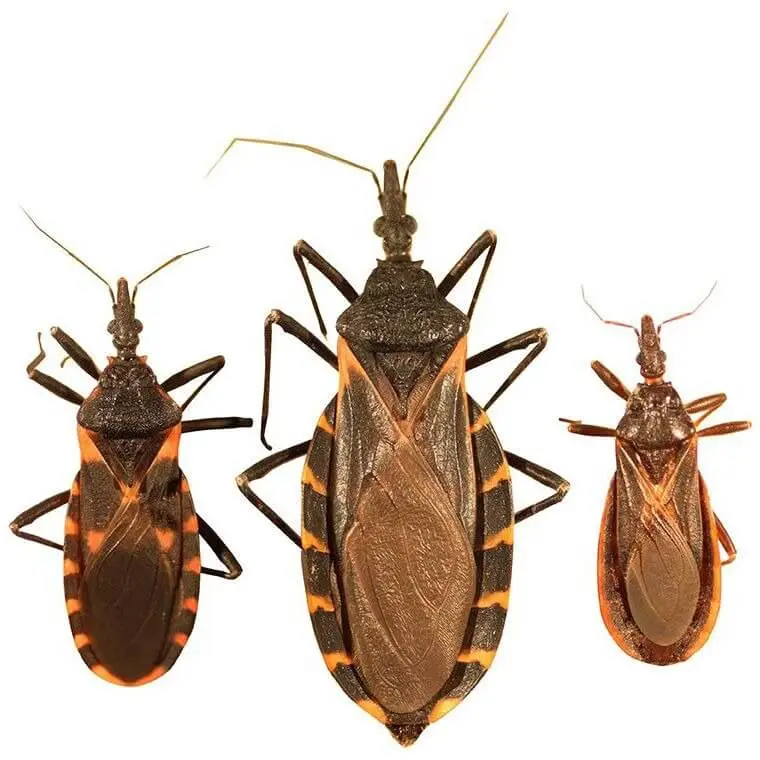
While kissing bugs may be confused with other insects, they have some distinguishing features:
- Long, oval-shaped body with six legs
- Thin, cone-shaped head with long antennae
- Light brown to black body with yellow, red, or tan markings
- About the size of a penny (1 inch in length)
Symptoms of Kissing Bug Bites
Kissing bug bites are often painless and resemble those of other insects. Some people may not notice the bites, while others may find clusters of small bites around the mouth and eyes.
In rare cases, allergic reactions can occur, resulting in itching, swelling, and redness. Antihistamines can help manage these symptoms. Severe allergic reactions, like welts, hives, or even anaphylactic shock, may require immediate medical attention.
Health Risks: Chagas Disease
The primary risk from kissing bugs is Chagas disease, caused by the Trypanosoma cruzi parasite found in the bugs’ feces. While not all kissing bugs carry the parasite, some regions have up to 60% of the population infected. The disease is transmitted when parasite-laden feces come into contact with an open wound or mucous membrane, like when someone touches their eyes or mouth with contaminated hands.
Phases of Chagas Disease:
- Acute Phase: This phase lasts a few weeks after infection. Symptoms may be mild or absent but can include body aches, fever, rash, and swollen lymph nodes. Some children may show Romaña’s sign, swelling around the eye, which is a key indicator of the disease.
- Chronic Phase: After the acute phase, symptoms usually improve, but the infection remains in the body. Although many remain symptom-free, about 20-30% may later develop severe cardiac or gastrointestinal issues, such as an enlarged heart or digestive complications.
Treatment of Chagas Disease
Chagas disease can be treated early with antiparasitic medications like nifurtimox or benznidazole. These medications are not widely available in the U.S., but doctors can procure them. Once the disease reaches the chronic phase, treatment options are limited, making early diagnosis and intervention crucial.
Preventing Kissing Bug Infestations
To avoid kissing bug infestations, eliminate entry points and use pest control methods:
- Repair window and door screens
- Seal cracks and gaps in walls, windows, and floors
- Clear away brush, fallen branches, and rock piles around your home
- Turn off outdoor lights to avoid attracting bugs
- Use treated bed nets and curtains
- Don’t crush kissing bugs, as this can spread the parasite; instead, place them in a sealed container with rubbing alcohol or freeze them
- Clean surfaces with rubbing alcohol or bleach after contact with a bug
When to Seek Medical Help
Although most kissing bug bites don’t lead to severe infections, seek medical advice if:
- You live in the southern U.S., Mexico, or Central America and notice bites around your face
- You experience a severe allergic reaction to a bite
- You develop flu-like symptoms after a bite
- You suspect an infestation in your home
Summary
Kissing bugs are becoming more prevalent and can transmit Chagas disease, a serious condition. Though not every kissing bug carries the parasite, and not all bites lead to infection, it’s important to be aware of the risks and take preventive measures. If symptoms arise or you suspect an infestation, seek medical attention and pest control services promptly.